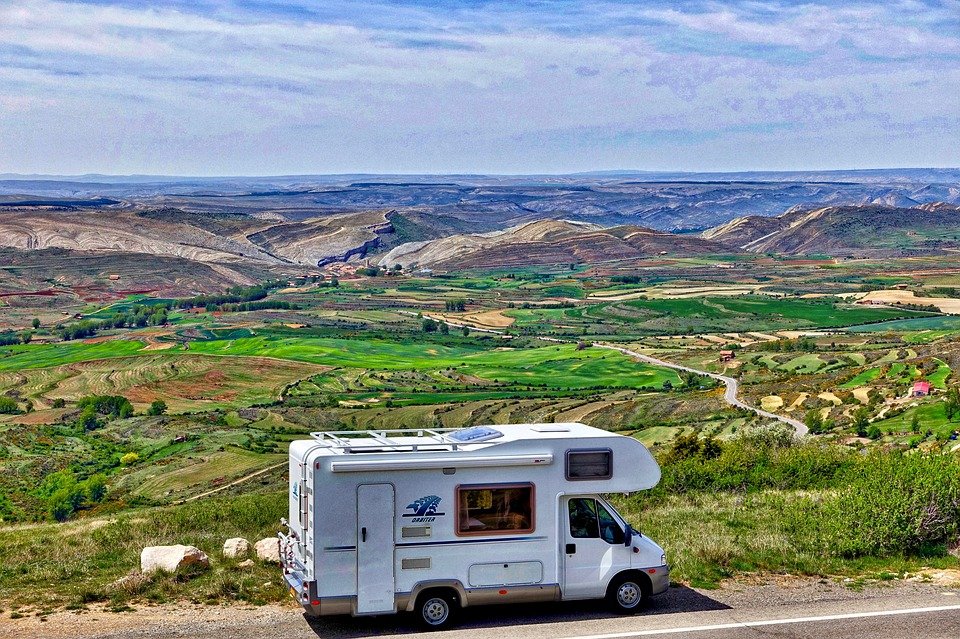
If you’re the type of person who travels and go on camping trips a lot, then you might run out of ideas on where to go from time to time. This is one of the common dilemmas among campers and travelers, finding a campsite or travel spots can sometimes be hard especially when you feel like you’ve gone to every spot or location you could think of!
Some of the best things are the uncanny yips of distant coyotes, mountain panoramas or huge desert areas, the smell of pine, campfires, and fresh air– these all are really soothing sensations. If you’re camping in the United States, these sites are almost always on BLM land.
These government-run campgrounds are a great location to relax and enjoy the great outdoors. Everything you need to learn is how to set up camp there.
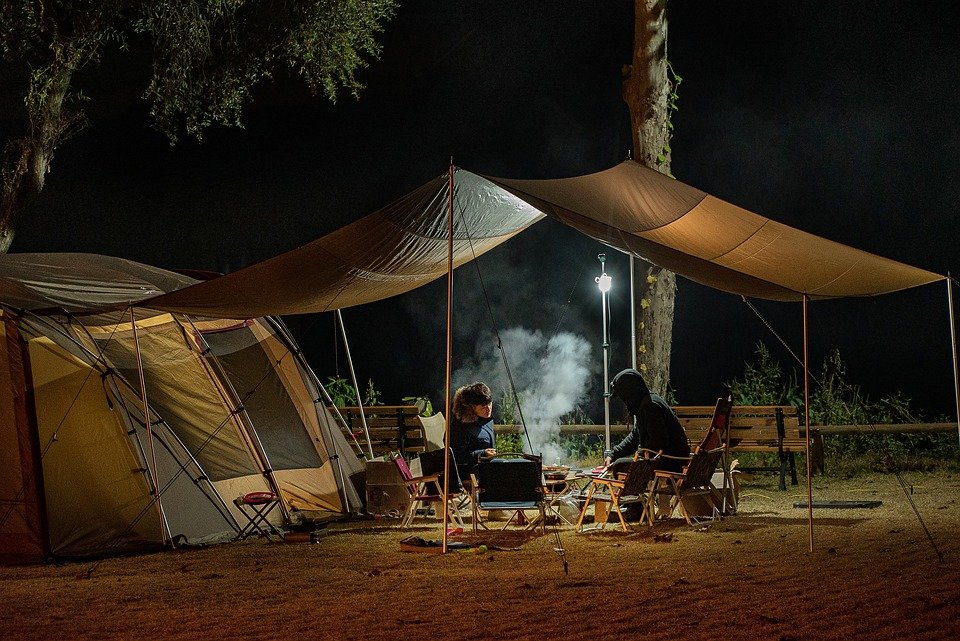
What is BLM Camping?
Before we talk about other things regarding the BLM camping, we first need to know what exactly this is.
What is BLM Land, exactly? The solution is really straightforward. The Bureau of Land Management is an acronym for the Bureau of Land Management. And, much to our delight, camping on BLM territory is almost always free!
Many people think of BLM as free camping areas, locations where campers can enjoy the natural beauty without paying a fee. However, several of the BLM’s lands are used for reasons other than camping.
“The BLM’s mission is to sustain the health, diversity, and productivity of America’s public lands for the use and enjoyment of present and future generations,” as what is stated on their own webpage.
BLM land is public property that can be used for a variety of purposes such as ranching, mining, and recreation. Some BLM land is also designated as a nature reserve and natural area.
The majority of the BLM’s public lands are located in the 12 western states. The BLM, on the other hand, is in charge of lands all around the United States.
The Bureau of Land Management
Knowing what the Bureau of Land Management is and its history might also help you understand its objectives better and what makes it great not just as an idea for camping but also what makes it great as a whole.
The General Land Office was founded in 1812 and became the Bureau of Land Management in 1946. Its primary intention was to promote homesteading and migration westward.
Currently, the BLM oversees one-tenth of America’s area of land, ensuring that natural and cultural treasures are protected. This is one acre from every ten. It moreover entails handling 30% of the resources found in the United States.
Livestock pasture, forestry, and leisure locations for biking, hiking, and camping are among the other lands. Whereas the majority of these properties are on the west side of the United States, the lands and minerals can be found in any state. From woodland to polar tundra to desert and just about everything else, the landscape is diverse.

The Meaning of BLM Camping
BLM camping refers to a variety of ways to spend a night on such forestlands. Several people believe that because the BLM maintains the grounds, they have free reign to do whatever they want with them.
Nevertheless, since our public lands have been used and maintained in so many different ways, this doesn’t quite work like that anymore. The simplest approach to find out if you can camp on public lands is to read instructions that are commonly posted on these grounds or to consult the BLM webpages for each location.
Most people often associate camping on public lands with being in places that have few or no amenities. In actuality, camping on controlled grounds can range from staying in highly established campsites with all the facilities to pitching a tent in the bush with nothing other than what you’ve packed.
What is Dispersed Camping?
One approach to distinguish the various types of camping on public lands is to use the term dispersed camping. It’s often termed dispersed campsites if you’re camping for no cost without conveniences and away from developed recreational activities.
Dispersed camping is permitted on many of these public lands as long as it does not compromise with wildlife protection or land protection. Whenever you set up camp, look for an area that has already been used as a campground. Signs such as a flattened surface and tire tracks leading into the location can usually be seen. The less we have an effect on public areas, the longer we will be able to camp there. Dispersed camping has been practiced in BLM Lands for such a long time and it is a good cause especially for the sake of the environment and nature preservation.
Is it Free to Camp on BLM Land?
The straightforward answer is that you can camp on BLM land for free. Still, camping is not permitted on all lands, because there are still laws to observe. Camping at authorized BLM campgrounds may cost money in select very specific circumstances.
For a variety of reasons, camping on BLM is one of the people’s personal favorite sorts of camping. For starters, the campgrounds are rarely crowded. This has the opportunity to spread out and truly connect with nature and appreciate it more right before your eyes.
Other than that, the pricing is reasonable. It’s pretty incredible to pay nothing for a private camping spot.
Although camping on the BLM charges no cost, for the most part, there are still some exclusions. A part of BLM land, for instance, is situated just outside of Arches National Park. To manage campers coming to visit, the park service has built numerous campsites on some of this acreage.
The developed campsites feature only the most basic amenities, such as garbage cans and restrooms. There is a small camping fee associated with these amenities.
Paid camping on the BLM is available at Big Bend Campground in Moab. Keep in mind that this is the exception rather than the guideline.

Is BLM Camping Safe?
One thing you will always wonder about when you’re camping is if the location you will be staying at or wandering in is safe.
We all know that no one’s safety can be assured at any time or in any location. You’re in charge of doing whatever you need to feel secure, which could include basic things like having clean drinking water. It could also include something more serious, such as carrying a firearm. However, with the last thing mentioned you should be sure to check your state’s restrictions first! BLM is not constantly monitored, there may well be risks just by being out there, such as wild creatures or open mines.
Whenever one is camping at any place, the standard rule is to follow your instincts and understand how much you and your vehicle are competent of. Are you ready, for instance, if you’re driving down a ten-mile rutted four-wheel-drive route into the canyon with no cell service?
Being prepared on your own solely will always be a good idea because anything can happen especially when you’re located in the forests or the wild. The outdoor locations and the nature can be a good place to spend a vacation on but it doesn’t always guarantee your safety as well.
Start preparing by learning the overall structure of the land, where to find emergency assistance in the event of an emergency, and what other people think about how safe a location is.
Where is BLM Located?
Now, you might be wondering where the famous BLM is actually located. These are a lot of areas connected to the BLM Land so it is not actually situated in just one place.
The majority of BLM land is found in the western portion of the United States. To the most BLM acreage, Alaska is the clear leader, but Nevada is a close contender. This graph depicts the top 12 states in terms of the BLM area.
The great thing about BLM land is that it’s typically in spectacular sites.
Whenever the government establishes a National Park, the territory rarely connects to private property. National Parks frequently connect to other forms of public land, such as National Forests, Wilderness Areas, and Bureau of Land Management (BLM) land.
Numerous individuals have stayed outside from National Parks for free. Badlands National Park, Glacier National Park, Yellowstone National Park, and Padre Island National Seashore, for starters, are all fantastic places to camp for free. You can guarantee a nice experience around these areas and lands whenever you want!
Finding BLM Land
During journeying in the past, individuals used to converse with one another, this is an easy way to know or locate the destinations you are looking for. They’d arrive in a place and inquire at a ranger station, law enforcement agency, or government office about the best camping areas. It is actually very effective until this day because as long as there are people you can ask around, you can gather more information on the road. This remains one of the best finest ways to locate BLM campsites, as you may discover hidden jewels only locals are aware of.
Luckily, we love our technology in the twenty-first century, because there are lots of applications and internet services to assist you to find locations and be able to experience camping on BLM land.
The public lands application for mobile phones is another useful tool that will aid you in locating amazing destinations. This app displays all public land managed by the Bureau of Land Management in the United States. Although this would not show you campgrounds, it will assist you to confirm that you’re on the BLM land, as there are often no signs.
Additional resources are available as well–just enter in a few terms to get directions, reviews, traffic conditions, photos, cell service possibilities, activities to do in the neighborhood, and more in moments.
Internet and technology are good sources of locating around even when you’re on the road so make sure to use it well as much as possible as long as you have the means.
How long can you stay around BLM areas?
When you’re staying at an established campsite, the length of your stay will vary per location. The majority will also have a limit of two weeks. Carefully study and observe the notices and directions that are provided for your own good as well. Valuable goods should not be left unsupervised for even more than 72 hours.
Dispersed camping on BLM land is typically restricted to 14 days in a 28-day period in any one location. The 14 days might be spent together or separately. If anyone plans to camp at another BLM site once you’ve used up your 14-day limit, then you must travel at least 25 miles away.
Such regulations should help to conserve the environment by reducing and preventing damage to plants and wildlife caused by human activity. You cannot leave personal property unattended longer than 10 days.
BLM Land and its Purpose
If you’re wondering more about the purpose of the BLM lang and why it is utilized as it is right now, then we have all the answers for you. The areas are not just used solely for camping on BLM land, the whole concept can be used for a variety of things, hence why it is so amazing for us and for many people that’s been familiar and knowledgeable about it already. The Department of the Interior oversees the agency, which is overseen by the US Congress. They’ve indicated numerous possibilities for this area in their stated mission.
It promotes culture and recreation for many people!
The possibility for leisure is one of many people’s favorite aspects of BLM land. In these public areas, you can go camping, hiking, biking, kayaking, fishing, and hunting, to name a few activities.
Please remember that the activities are limited, so know what’s provided by the local BLM office to determine what is permitted at each location.
Another important duty is to preserve the ecological, cultural, and historic significance of these public areas. You can certainly say that BLM has some of the most interesting cultural sites.
It is indeed fairly incredible that several of America’s best petroglyphs are found in public areas, rather than in National Parks. This allows you to enjoy history without having to deal with a large throng!
BLM promotes energy self-sufficiency and long-term yield
The purpose of this is not just to let people enjoy their camping on BLM land.
The bureau’s first purpose is to promote energy development. Natural gas, oil, coal, and clean energy are all examples of this. To explore possible energy options, the government will effectively “rent out” parts of the property.
Such clean energy projects taking place on BLM land are quite interesting. Geothermal and biomass energy sources, in addition to solar and wind energy, are being investigated.
Timber harvest and animal grazing are also carried out on the property. At a BLM site, it’s not uncommon to see lots of cows and even cow pies!
The BLM really does promote amazing things with its existence and it’s priceless to see many people supporting this while still being able to enjoy the sight of nature.
What are the best states to visit for BLM camping?
We know a lot when it comes to BLM land, both camping and exploring. Even though Alaska does have the most to offer for everyone, we don’t think it’s not just the best one. It is kind of difficult to access for some people which is why it is not the best one to recommend by many people.
Here are some other three great BLM areas you may explore. We’ll show you around some of people’s loved BLM campgrounds.
BLM California
In California, most of BLM land can be found in the southern desert. That implies you’ll be close to Joshua Tree National Park, Anza Borrego Desert State Park, Death Valley National Park, and the Salton Sea.
American Girl Mine, nearby the Imperial Sand Dunes, is also many traveler’s favorite accessible community lands campsite in California. You’ll always be able to find free camping spaces in northern California; they’re just not as plentiful.
BLM Arizona
The BLM lands of Arizona are among the most popular in the state. It is ranked 6th in the country and has a large number of acres accessible. Arizona’s varied landscape allows you to visit alpine, desert, and seaside areas.
You and your family can have a great time on BLM land at Lake Havasu. Craggy Wash is a BLM campground with excellent hiking, camping, and local water activities.
Quartzsite, Arizona is one of the most popular RVing destinations in the United States. Thousands of travelers go to nearby BLM land for the annual RV Show and Rubber Tramp Rendezvous. Quartzsite is a “must-see” for RVers, but many people also believe it has become less and less attractive as time passes.
BLM Utah
Zion, Arches, Canyonlands, Capitol Reef, and Bryce Canyon are among Utah’s five magnificent national parks. It thus suggests there’s a lot of BLM land in the area.
Campendium is a go-to resource for finding free BLM campsites in Utah and across the state. The Campendium webpage makes it straightforward to find free camping which you can visit anytime you want. Make sure to use it if you’re planning to camp around Utah.
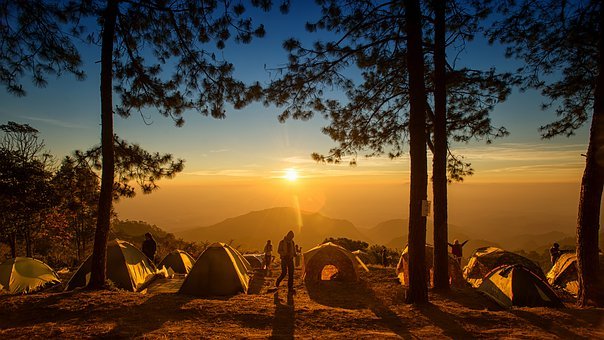
A Few More Things To Know Before Camping on BLM Land
After you’ve found the ideal site to spend a few days or nights on the public land, it’s a good idea to familiarize yourself with the area’s standards rules and routines. Numerous campgrounds and locations will provide you with details on the site and guidelines to follow, but we have also prepared you with things you might need to know beforehand.
Always be responsible for the stuff you bring
The majority of BLM sites lack garbage service, as well as other services. As a result, anything you bring in comes out as well. Hence more trash that stays on-site, the fewer opportunities we will have to use BLM properties in particular. We will lose rights to the property if we do not take care of it.
As we’ve said, the BLM Lands are used without compromising the nature and environment itself so if we do the opposite of that, we won’t be able to appreciate these locations anymore.
Be prepared and knowledgeable about the sites you’ll visit
Browsing reviews might help you figure out if a particular BLM site can meet your needs. However, keep in mind that these assessments should be taken with a grain of caution. Each person’s bad road, for instance, might be your greatest discovery. Use the knowledge you get from the reviews you’ve read or studied to be prepared on what you will expect and what you can do to make your experiences better on site.
Don’t forget to be respectful to other campers like you
BLM lands remain popular with visitors, and certain sites can grow rather packed. Respect the privacy of other guests. Ensure to only operate your generators at appropriate times and to remain quiet late at night and early morning. The more we are friendly to one another, the more we will all appreciate Mother Nature’s and the Bureau of Land Management’s beauty.
It is always better to appreciate and share these beautiful lands peacefully with other people. So you may want to avoid conflict with other campers as much as possible too!
Remember, there are rules and guidelines to follow
The BLM lands are free to access to many people or to all of us in general. However, just because this is a free site to visit, doesn’t mean we’re gonna lose respect for the environment as well. Since it is free, it’s just a bigger reason why we need to protect it and preserve these lands as much as we can.
This can be done by following the set guidelines by the site’s administrators. And remember not to do anything that can potentially harm these environments.