
In case you’re on the verge of making the decision to get the latest Nissan Rogue for your next SUV adventures, this nissan towing guide you’ll be sure to be in good company. The Nissan Rogue is a compact vehicle with a powerful 181-horsepower engine, excellent fuel efficiency, and a very well-appointed interior. But, before you make your final selection, you may also want to know if the Nissan Rogue has an impressive towing capacity. Certainly, the Nissa Rogue’s towing capability varies at a maximum of 1,350 pounds. For weekend outings, that’s more than enough power to pull a single ATV or maybe even a small teardrop camper!

Having an SUV, regardless of its size, frequently entails two things. That you are available to manage transportation for every scheduled weekend away and that you are the one who others call whenever they need you to move things for them are both good indicators.
Isn’t it good to have a sense of purpose? The Nissan Rogue will perform the majority of the work for drivers. When properly equipped, the Nissan Rogue’s outstanding max towing capacity of 1,350 pounds will allow you to effortlessly tackle all of these obligations with ease.
There is enough cargo room on the inside of the Rogue for your little belongings, but if you want additional space, keep in mind that this vehicle does have a significant towing capability.
An Overview of the Nissan Rogue
Powertrain Components and Overall Performance
The 2.5-liter normally aspirated four-cylinder engine in the Rogue will be phased out beginning in 2022 in favor of a smaller but more potent turbocharged 1.5-liter three-cylinder engine that produces 201 horsepower. The Rogue, like the previous year’s model, is equipped with a continuously variable automatic gearbox (CVT) and front-wheel drive as standard; all-wheel drive is available as an option.
Cargo Capacity and Interior Comfort
Several aesthetic cues are used from the Altima family car as well as the freshly updated Sentra small sedan for the Rogue’s interior. Storage compartments, a bi-level dashboard, as well as a squared-off shift knob are all high-quality design features that boost practicality while also adding a contemporary flair to the interior. Leather seats are standard on all models, with the exception of the mid-range SV, which may be ordered with optional faux-leather seating; the expensive SL and Platinum Rogues come with real leather, the latter of which is a semi-aniline hide and quilted stitching. Automatic temperature control with three zones, heated front seats, as well as a heated steering wheel are now all possible options. The amount of room available for passengers inside is similar to that of the previous model, however the amount of cargo space behind the rear seat has been reduced somewhat from 39 cubic feet to 37 cubic feet.
Driver Assistance and Safety Features
For the 2022 model year, the Nissan Rogue will be outfitted with a slew of standard driver-assistance systems to help it rival with similarly equipped competitors such as with the Toyota RAV4 & Subaru Forester. In addition, Nissan’s ProPilot Assist that has a semi-autonomous driving function will then be available as an option on the Rogue SL and as standard equipment on the Platinum AWD. And of course, actual mileage may vary with the driving conditions.
2022 & 2021 Nissan Rogue
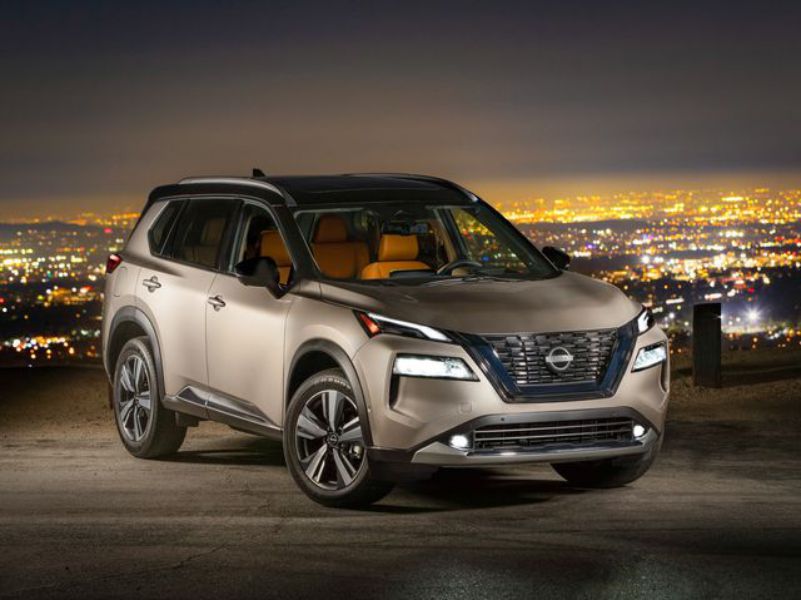
The Nissan Rogue continues to be one of the most spacious small crossovers on the market. Occupants will have plenty of room to spread out in both rows, as well as a variety of innovative storage options. Despite the fact that it is 1.5 inches shorter than the previous generation, the Rogue has a spacious cargo area
Beautiful new appearance, enhanced on-road manners, and updated interior technology. Despite the fact that this most recent makeover places the Rogue bit ahead of its predecessor, it still falls well short of major rivals in terms of refinement and driving pleasure.

It will be the first time that Nissan’s Rogue small SUV will be completely redesigned for the 2021 model year. The new Rogue will have a more appealing style as well as contemporary interior technology, greater performance, and more competent ride and handling. Rogue has historically performed well versus category leaders like the Honda CR-V, and Mazda CX-5 but has not performed as well overall, resulting in a low place in overall sales rankings. With this revamp Nissan’s moneymaker ups the ante in an effort to shake off its reputation for mediocrity–an effort that has so far proven to be moderately effective.
The Rogue seems to have enough power to tow a modest trailer, but not a large one. The Nissan Rogue towing capacity is at about 1,350 pounds, that basically means you have a wide range of options when it comes to what you can transport. You have total command of the situation with your Rogue and a little trailer.
And of course to those who enjoy cycling will find a hitch-mounted bike rack to be an excellent match for the 2021 Nissan Rogue. The majority of all these bike racks are modest, compact, and light, and they can accommodate up to 4 full-size bicycles.

For example, if you’re going to the beach for a week and want to stay up with your fitness routine, this vehicle has the ideal numbers to get the job done.
While we’re on the subject of family holidays, if you have two adults and two children, it’s difficult to picture squeezing everything into any car; but, the Nissan Rogue has the extra capability of towing a compact pull-behind trailer.
There are a plethora of these trailers available on the market that can provide lightweight options for cars with modest engine sizes. Something in this design would be ideal for the Rogue in 2021.
Engine – 2.5 liter Direct Injection Gasoline 4 Cylinder
Max Horsepower – 181
Max Torque – 181 lb-ft
Transmission – Xtronic CVT
Maximum Towing Capacity – 1,350 lbs (When it is properly equipped)
2020 Nissan Rogue
The Nissan Rogue has been one of the finest compact crossovers upon its market, with a great balance of beautiful appearance and comfortable interiors. It is indeed Nissan’s most popular option, surpassing the Altima as well as the Sentra sedans. Still, the 2020 Rogue comes up short compared with both the segment’s numerous more appealing competitors. Its four-cylinder engine struggles to propel the big crossover, which therefore feels heavy-handed to drive. However, it does give a pleasant ride and abundant passenger room.

The Rogue also boasts a plethora of standard driving assistance and infotainment systems, but the total package lacks the cohesiveness of elite competitors such as with the Honda CR-V as well as the Volkswagen Tiguan. Even though the 2020 Rogue might not even rank among the greatest crossovers & SUVs, it’s a practical mobility gadget for modern families.
After Nissan made numerous driving assistance standards and introduced several additional options for the earlier models, the 2020 Rogue comes over unmodified. However, each model did receive a minor price hike and the hybrid engine has been eliminated.

Whereas the leading Rogue SL sports the greatest features, its price places it above more desired competitors like both Honda CR-V and also the Subaru Forester. This explains why the mid-level SV model is recommended. Those that need four-season capacity may add all-wheel drive for a price of $1350. Every 2020 Rogue SV offers standard comforts including heated front seats, a power driver’s seat, and even dual-zone temperature control, and also a motion-activated liftgate, and lastly a rear autonomous emergency braking.
You may also want to take the $1800 SV Premium option which adds comforts like a heated steering wheel as well as a memory driver’s seat. Likewise, the kit contains technologies such as a 360-degree video system and the Nissan’s semi-autonomous ProPilot Assist capability.
Engine – 2.5 liters 4 Cylinder
Max Horsepower – 170
Max Torque – 175 lb-ft
Transmission – Continous Variable Transmission
Maximum Towing Capacity – 1,102 lbs
2019 Nissan Rogue
The 2019 Nissan Rogue offers a slew of consumer-friendly amenities in a stylish and comfortable vehicle. Even while it is available with a wide range of driver-assistance features and a fuel-efficient hybrid drivetrain, the Nissan Rogue falls behind more smooth and enjoyable-to-drive competitors. Nonetheless, its elevated sitting position and optional all-wheel drive tick all the boxes that crossover buyers are looking for.

Gasoline versions have good fuel efficiency, but they have sluggish acceleration and are loud when running. For the same reason, the 2019 Rogue does not offer the mix of agility and luxury offered in top competitors such as the Honda CR-V. Instead, the Nissan employs its attractive external style and practical luggage space to draw attention to itself.
The Rogue includes a number of new packages as well as some driver-assistance systems that are now standard. In addition to forward-collision detection, automatic emergency braking, automated high-beam headlamps, lane-departure alert, and lane-keeping assist, every model now has these features: In addition, all models now include a prompt to monitor the back seat once the engine has been shut down. The SV and SL variants are equipped with rear automatic emergency braking as well as rear parking sensors like a default feature.
The top-of-the-line SL is also equipped with ProPilot Assist as standard, which was previously an option. The Special Edition package adds heated front seats, 17-inch wheels, chrome exterior details, and other goodies to the already impressive list. It comes with 18-inch wheels, an electronic parking brake, as well as a ProPilot Assist technology as part of the new Premium package.
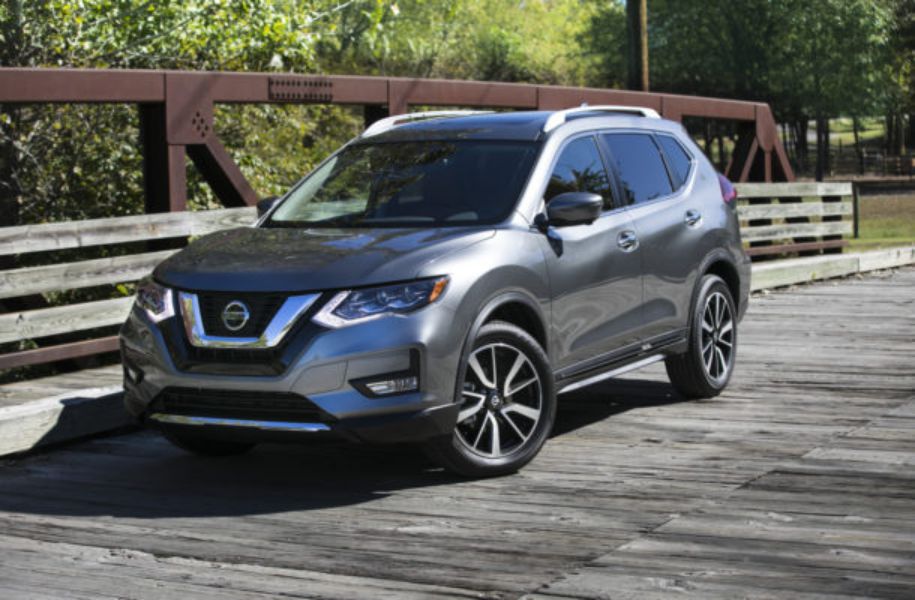
Nissan’s ProPILOT™ Assist technology, continuing to pave the way for future fully autonomous vehicles, will be available on the company’s bestseller, the Rogue compact SUV. ProPILOT Assist reduces the hassle of stop-and-go driving by helping control acceleration, braking and steering during single-lane highway driving.
The mid-level Rogue SV offers the best value for money when it comes to pricing and functionality. The normal front-drive version is powered by a four-cylinder engine with 170-hp and is equipped with a continuously variable automatic gearbox (CVT); all-wheel drive is available for an additional $1350. In addition to heated front seats along with power adjustments that is specifically for the driver, a proximity key that features a push-button start, as well as a dual-zone automatic temperature control are included in the list of desired standard equipment.
As an option, we’d go with the SV Premium package, which adds the semi-autonomous ProPilot Assist driving system, a navigation, as well as a heated steering wheel, lastly is a 360-degree camera that features moving object detection from Nissan. Exactly as you’d anticipate, the technology identifies moving objects with low speeds and notifies the driver as soon as they are detected.
Having an uneasy stomach after just a supersize value meal or the Rogue’s gasoline-powered engine—can be described as noisy and hesitant. The base configuration has a four-cylinder engine with 170-hp and a continuously variable automatic gearbox (CVT). The CVT’s slow reaction and languid delivery of power lead the engine to scream when the accelerator is pressed hard; this powertrain appears to drag the Rogue through town rather than pulling it forward.
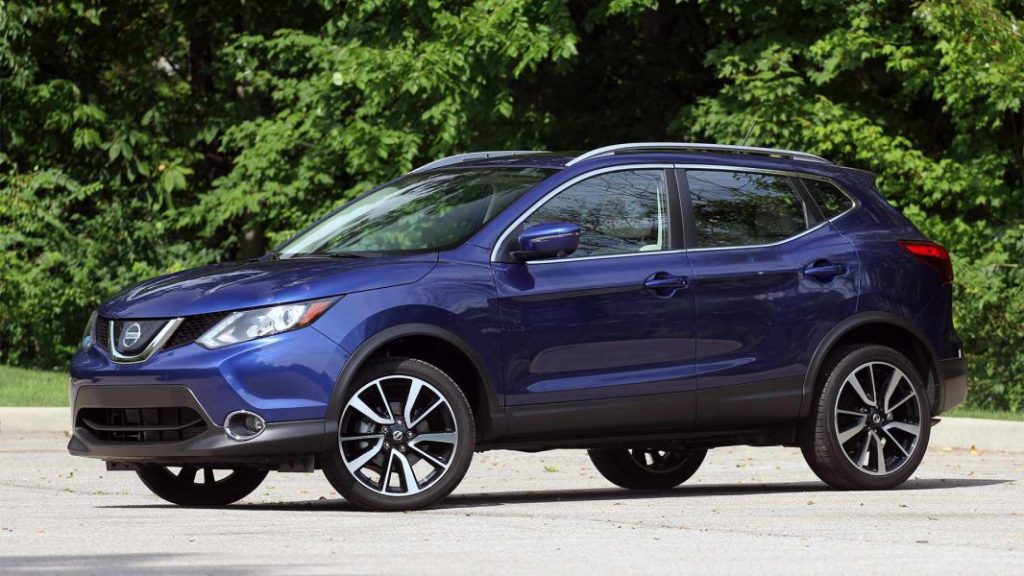
A hybrid version is also available, it comes with the Toyota RAV4 as well as the Mitsubishi Outlander PHEV, are the only hybrid vehicles available in this class. It is powered by a 2.0-liter four-cylinder engine and an electric motor, producing a total 176 horsepower when used together.
The soft suspension of the Rogue gives a comfortable and relaxing ride, and about the only accolade we can bestow on it. Overall control is compromised by the crossover’s spongy ride, which causes the vehicle to bob and shake around curves even while traveling at relatively low speeds.
Furthermore, when moving along the highway in a straight path, it does not appear to be rooted and steady. Although the Rogue’s cornering gripping was comparable to that of its rivals in a testing, its bigger size and listless steering combined to make it seem shockingly ponderous when compared to those same tiny competitors in our testing.
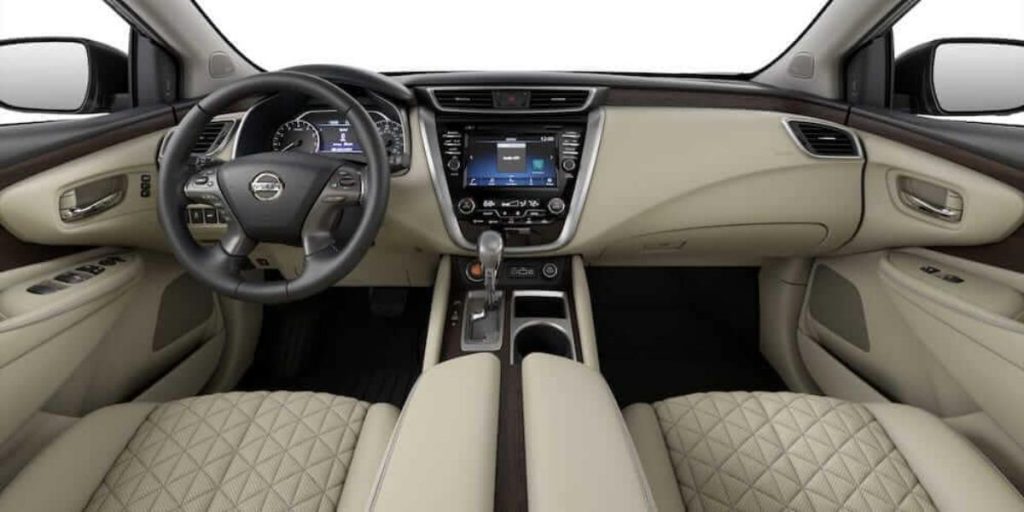
Despite the Rogue’s comfy and appealing inside, the Platinum Reserve Interior option elevates it to the level of luxury featuring caramel-colored leather seats but it would only be available on the top-tier SL trim level. Despite the fact that Nissan’s Zero Gravity rear bucket seats are quite comfortable, it is shocking that there isn’t a power-adjustable dedicated for the passenger seat available.
The Rogue has enough of front-seat legroom, but long-legged occupants may feel the rear seats to be a little constricting in the back.
A 7.0-inch touchscreen infotainment system dubbed NissanConnect is standard on each and every Rogue, and it has Apple CarPlay as well as an Android Auto and several other features. The touchscreen is bordered by physical buttons, which seem to be handy, however there is no home button in this configuration. The screen has a low quality, the menus aren’t really sensibly organized, and the thin labels make it difficult to distinguish between the different buttons at night. A dealer-installed component, 4G LTE Wi-Fi, is available for all Rogues as a factory option.
Engine – 2.5L 16-Valve 4-Cylinder
Max Horsepower – 170
Max Torque – 175 lb-ft
Transmission – Continous Variable Transmission
Maximum Towing Capacity – 1,102 lbs
2018 Nissan Rogue
In terms of practicality and efficiency, the Rogue is Nissan’s best-selling small crossover. Rogue’s good appearance and comfy cabin are enticing, but it doesn’t have the same personality or refinement as its competitors. Front- or all-wheel drive is available, but the 170-horsepower 4-cylinder engine is uninspiring. It has excellent crash test ratings and a plethora of active safety features, making it highly safe. Even said, there are a slew of interesting and useful alternatives to the mass-market Rogue in this category.
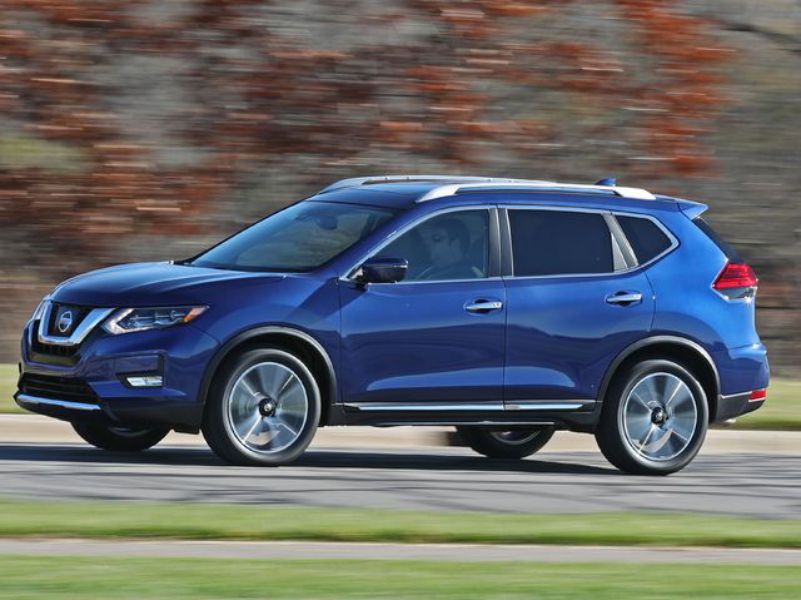
The Rogue’s exterior and mechanical design haven’t altered for 2018, however the third row is no longer an option. There are a few qualities that make it more appealing to consumers in other markets, though. The 2018 Rogue’s ProPilot Assist system is the most notable new feature. On the highway, the system assists the driver with acceleration, braking, and steering via lane-keeping assistance as well as stop-and-go adaptive cruise control. A 7.0-inch touchscreen featuring Apple CarPlay and an Android Auto comes standard on every Rogue. Two new exterior colors are available: Scarlet Ember and Midnight Pine, along with an additional USB port (making two in total), newly revised equipment for higher trims, renamed packages, and a shuffle of available packages.
For 2018, the Nissan Rogue will have the same engine & CVT as the previous models. The Rogue’s gasoline engine may be described as “noisy and hesitant,” just like an uneasy stomach following a supersize discount meal. Alternatively, you can choose from a variety of hybrid options. The basic engine and transmission are a 170-hp 2.5-liter four-cylinder with a continuously variable automatic transmission (CVT). This powerplant seems to drag rather than pull the Rogue through town because of the CVT’s slow reaction and syrupy power delivery.
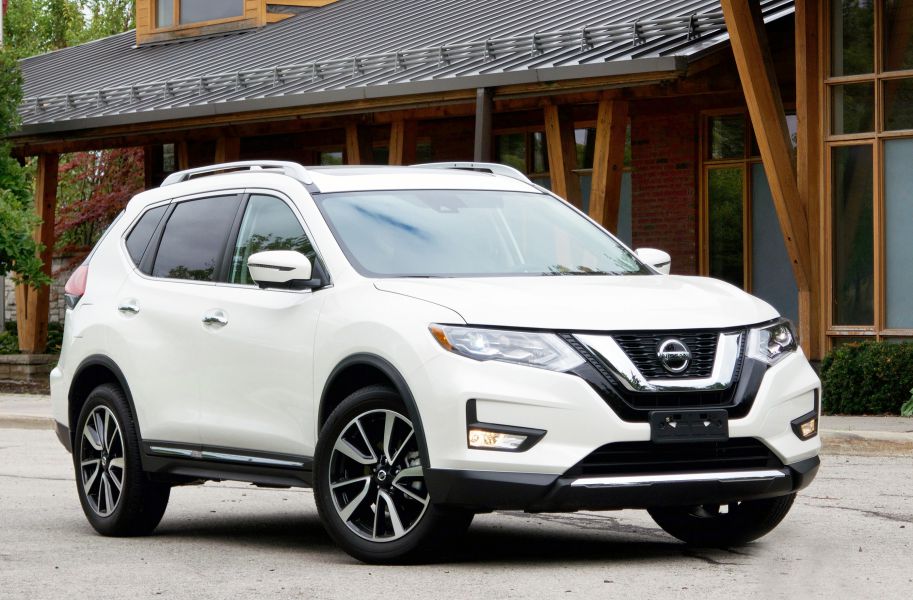
A 2.0-liter four-cylinder engine and an electric motor combine to create 176 horsepower when connected to the same CVT as the gasoline engine in the hybrid model. Like visiting your grandparents, driving the Rogue is a pleasant experience despite the lack of excitement. In terms of performance, the Nissan’s acceleration is lagging behind class leaders, its body movements are bouncy, and its brakes are mediocre. During typical driving, the pedal is light and the brakes react erratically. When you apply the brakes firmly, the Rogue’s nose drops noticeably.
The Platinum Reserve Upholstery option enhances the Rogue’s interior, making it a more luxurious experience. The only alternative compact crossover with a third row is the Volkswagen Tiguan, which is why the 2018 Rogue isn’t any longer available. The inside of the Nissan remains basically untouched, keeping the pleasant atmosphere that is one of its highlights. Sound-absorbing materials have also been added to the Rogue’s interior, making it quieter for its passengers. The Zero Gravity front bucket seats in the Nissan Altima are really comfortable, but it is shocking that there is no power-adjustable for the passenger seat is available. In terms of luxury, you can’t go wrong with the Platinum Reserve Interior option. Dark camel leather that features quilted inlays covers the seats, and the doors, dashboard, and center console are all covered in the same material to create a sumptuous interior.
Engine – 2.5-liter 4-cylinder
Max Horsepower – 170
Max Torque – 175 lb-ft
Transmission – Continous Variable Transmission
Maximum Towing Capacity – 1,102 lbs
2017 Nissan Rogue
The Rogue is indeed a popular seller, but it is far from the finest option you can make in this situation. Its powertrain has jerky behavior, acceleration is laborious, and it is more expensive than its biggest competitors. Its severe lack of driving characteristics and underwhelming performance are partially countered by a spacious and pleasant cabin, above-average storage space, as well as a fuel-efficient gasoline engine.

It’s the only vehicle in its class that provide an optional third row, and it’s one of just two that offer a hybrid type (the other being the Toyota RAV4). However, considering its low price, poor performance, and lack of refinement, the Rogue is a substandard meal bargain that will satisfy the majority, and not those who are looking for the most bang for their money. There are better solutions available to them.
The Nissan Rogue receives a facelift as well as the world’s first hybrid drivetrain. New materials have been used throughout the inside, as well as a steering wheel with a flat bottom and a revised central console. Active safety features, like as adaptive cruise control & automatic emergency braking, are now available on the Rogue. In addition to remote start, a heated steering wheel, it also has memory mirrors for the driver’s seat, and a Platinum Reserve interior package that includes tan leather-appointed seats with quilted inserts, there are several more new optional options available.

The Rogue’s base powerplant is a 2.5-liter four-cylinder engine with 170-hp that is coupled to a continuously variable automatic gearbox (CVT). When you apply high throttle to the Rogue, the CVT’s slow reaction and syrupy power delivery lead the engine to howl; this powertrain appears to drag the vehicle about town rather than pulling it. The hybrid variant combines a 2.0-liter four-cylinder engine with an electric motor to produce a combined 176 horsepower, which is transmitted through the same continuously variable transmission. Both powertrains are available with the choice of either the front-wheel or the intelligent all-wheel drive.
You don’t need to drive to our test track to find out that the Rogue is sluggish; simply driving around at a parking lot will provide you with all of the information you want. The rate of acceleration is clearly slower than that of the class leaders. The Rogue’s soft suspension gives a comfortable ride, that’s about the only accolade that can be bestowed on the vehicle. Its spongy ride makes it difficult to maintain overall control, leading the crossover to bob and lurch through curves at even moderate speeds. Furthermore, when moving along the highway in a righteous path, it does not appear to be rooted and steady.
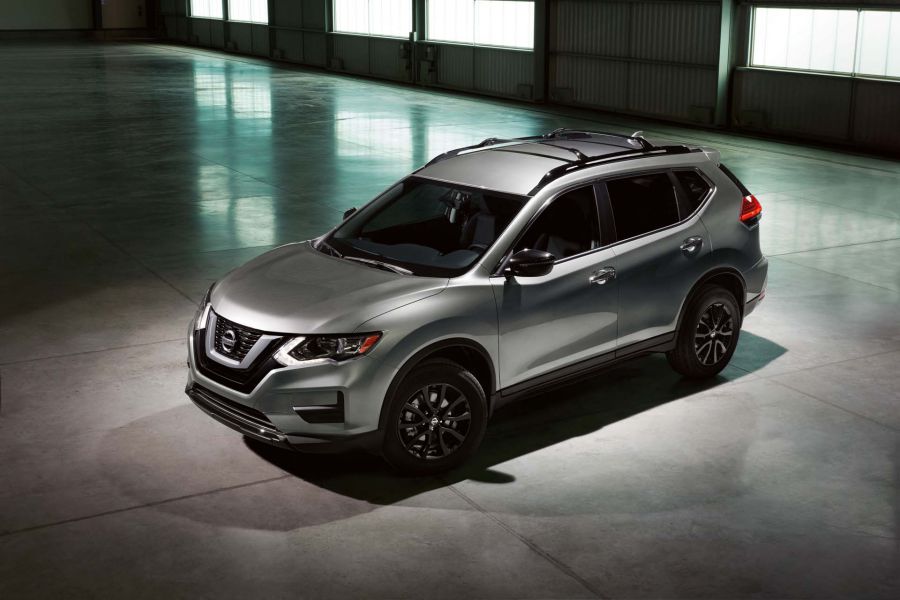
The inside of the Rogue has been mildly renovated, and it is a pleasant and appealing space, with an optional third row that is unique in its class. Despite the fact that Nissan’s Zero Gravity front bucket seats are quite comfortable, we’re shocked that there isn’t a power-adjustable passenger seat available. The Platinum Reserve option, which is available on the top-of-the-line SL trim, adds a premium touch. To produce a luxurious ambience, it wraps the seating with dark camel leather that features quilted inserts. The leather also extends to the doors, dash, and center console. The Nissan is a practical vehicle because to its large cargo capacity, which can be utilized with the seats up or down, as well as its ample cubby storage space.
Some customers may be satisfied with the Rogue’s smooth ride and comfy cabin, but competing crossovers may be a more attractive option.
Engine – 2.5-liter 4-cylinder
Max Horsepower – 170
Max Torque – 175 lb-ft
Transmission – Continous Variable Transmission
Maximum Towing Capacity – 1,000 lbs
FAQs
Q. Can you pull a trailer with the Rogue’s towing capacity?
A. The trailer can carry small trailers and the vehicle has an impressive drive. A tow capacity of 1,350 pounds is available, so there’s plenty of room for hauling. With the Rogue or small trailer you control everything.
Q. How much will the Rogue be able to Tow?
A. A Nissan rogue weighs up to 1500 pounds. Nissan carries the maximum Rogue – Tow capacity in all trims. It doesn’t matter how many Rogue S or Rogue SV. It also boasts a fantastic Nissan Rogue specification and is ready to handle anything you have in your bag.
Q. Can a Nissan Rogue tow 3500 lbs?
A. The best measuring factor when towing trailers is the car’s towing capacity. Rogues are able to carry around 1000 pounds.
Q. Can a Nissan Rogue Tow 2000 lbs?
A. Towing capacity: Overall capacity for ropes ranges between 1000 lbs. 1500 kg. Typical towing capacities are about 1,100 lbs.

